
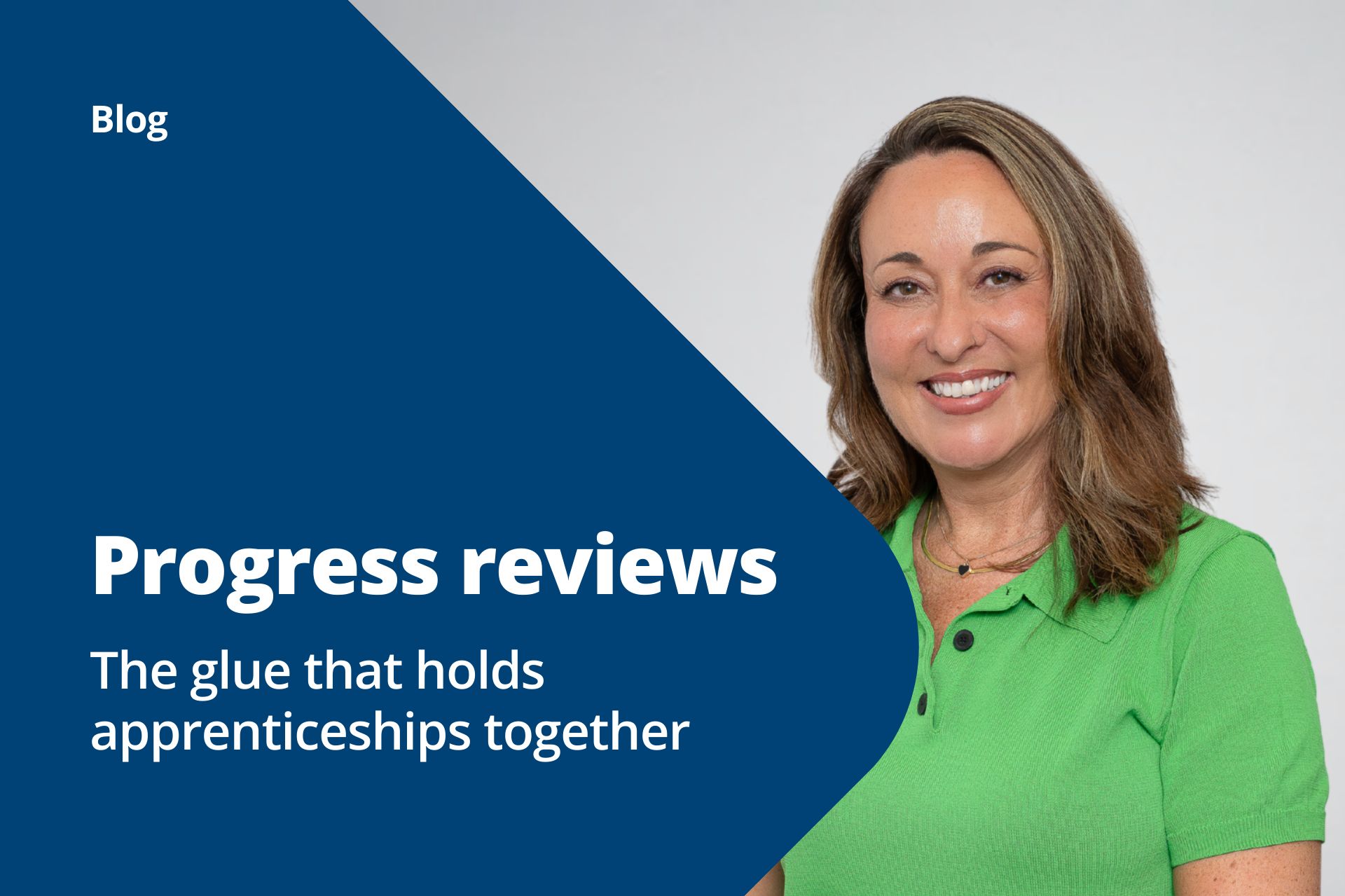
This blog was written for FE News by SDN Mesma Group Co-Founder and Director, Lou Doyle. Lou is both an Apprenticeship and T Level Ambassador. She was awarded North East Skills Champion 2024 by the National Apprenticeship and Skills Awards.
Progress reviews are the glue that holds apprenticeships together. So why aren’t employers prioritising them?
If you manage apprenticeships, you’ll know the struggle. Getting workplace mentors to actually show up at progress reviews can be like herding cats. Training providers complain about it. Apprentices notice it. And frankly, as employers, we’re not always holding up our end of the bargain.
When mentors engage properly in progress reviews, magic happens. Apprentices stay motivated, develop skills faster, and actually apply what they learn. When mentors don’t show? The opposite.
With around 40% of apprentices leaving their programme before it finishes, we can’t pretend this doesn’t matter. The good news is that some of it is fixable. We just need to understand what’s getting in the way.
Three things stopping mentors (and how to fix them)
Changing behaviour is about addressing three practical areas: capability, opportunity and motivation. Let’s break them down.
1. They don’t know what ‘good’ looks like
There are mentors who haven’t got a clue what they’re supposed to do in a progress review. What questions should they ask? How do you assess competence in real work situations? How do you give feedback that’s actually helpful?
The fix isn’t complicated. We need to give mentors simple, practical guidance that fits our business culture:
What questions do we want mentors to ask? How should feedback be delivered? What happens when the apprentice is struggling — and what about when we’re the ones causing the problems?
Training providers will give you templates. That’s helpful. But we employers need to own this, creating a consistent model that actually reflects how we work.
2. They can’t find the time
Even when mentors know what to do and feel confident doing it, a 30-45 minute review still has to compete with every other urgent thing happening that day. Without structural support, reviews lose every time.
The most powerful fix is to make it part of the job. When “supporting apprentice development, including attending progress reviews” appears in job descriptions or objectives, it’s not optional. It’s not “choosing development over real work”, its showing it is the real work instead of expecting them to fit it in.
Other practical ideas:
Work with training providers to avoid scheduling reviews during your busiest periods. Set up recurring calendar blocks; treat them like team meetings that don’t get bumped. Let training providers handle the admin (scheduling, reminders, notes) so mentors just need to show up prepared. If someone supervises multiple apprentices, batch the reviews together on the same day.
And crucially: factor apprentice support into capacity planning. When you’re setting objectives or allocating projects, remember that supervising apprentices takes time. Otherwise you’re forcing mentors to choose between hitting their targets and supporting their apprentices properly.
3. They don’t see the point
If reviews feel like box-ticking exercises where mentor input doesn’t actually matter, people stop showing up. Can you blame them?
The structure of the review itself matters enormously. Reviews should focus on how apprentices are applying learning in their actual roles, what development opportunities exist in upcoming work, and how workplace challenges should shape training priorities. This makes mentor input essential as they’re contributing workplace expertise that training providers can’t provide alone.
Reviews structured as training provider updates with minimal space for employer input? Those quickly become boring spectator events.
Close the feedback loop. When mentors see their observations actually influencing training, support, or development planning, they realise their contribution matters.
Where to start
Here’s something I haven’t often come across: HR professionals attending progress reviews to observe mentor practice, provide feedback, and check consistency.
Yet recognising good practice and providing support where needed is fundamental. When you extract insights from progress reviews that inform wider workforce development and share these with leaders, reviews become valuable business intelligence, not just individual apprentice check-ins.
You don’t need to fix everything at once. Start by diagnosing your biggest barrier:
If line managers say “I don’t know what I’m supposed to do,” tackle capability first. If it’s “I can’t find time,” focus on opportunity. If it’s “I don’t see what difference it makes,” work on motivation.
In all my time interviewing apprentices and observing progress reviews, I’ve never heard one say they don’t value their workplace mentor being there. But I regularly hear them express disappointment, sometimes real frustration, when mentors don’t show up.
The Big Apprentice Survey Report 2026, released this week by The Association of Apprentices for National Apprenticeship Week, highlights equipping line managers to support apprentices effectively as one of the top five actions for the year ahead.
That sounds like a challenge worth accepting.
Final thoughts
“Progress reviews should be more than checkpoints. They should be catalysts for learning, for reflection and for growth. As the demands on FE providers increase, from digital transformation to Ofsted expectations, it’s more important than ever that practitioners are equipped with the tools and techniques to make each review count.
This course is not about doing more reviews or adding extra admin. It’s about doing reviews better.”
For experienced practitioners ready to move to the next level, “Advanced Progress Review Practice for expert practitioners” offers the space, skills and support to reframe the role of the progress review and to transform it into something truly powerful. Click on the link to find out more, and do join us for our next session!